About Every Clear Night
Hello, my name is Jeff Newgard, and I am an astrophotographer.
It might sound like the opening of a certain kind of meeting, and in a way, that is fair. Astrophotography is certainly an obsession, arguably an addiction, and reliably a distraction from the more responsible things of daily life. By day I work in politics, but I am a firm believer that the way you stay sane in politics is by not letting it become the thing that defines you. So, this is what does: I am a husband, a father of a daughter and two Australian Shepherds (yes, we run a high-energy household), and an astrophotographer.
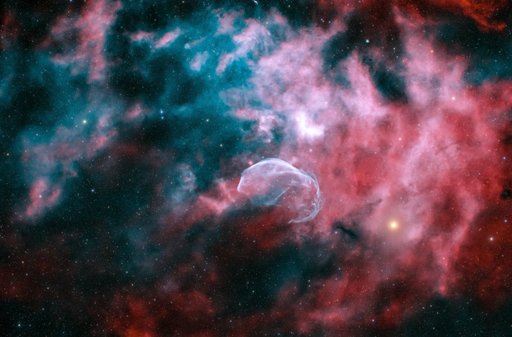
The obsession started early. I grew up camping with my grandparents across the Pacific Northwest — the national forests of the Cascades, the high desert, the coast. Dark skies come easy out here. You can drive twenty or thirty minutes past the city lights and the universe simply shows up. On moonless summer nights, the Milky Way shines so brightly overhead it feels like the stars could cast your shadow. I remember looking up as a kid, wondering whether every one of those points of light held life.
Now, as an adult, I take pictures of some of those same stars.
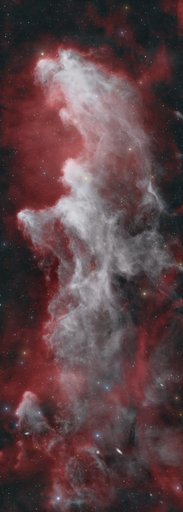
I circled astronomy for years — books, documentaries, podcasts, magazines — before buying my first telescope in 2021, while my wife was pregnant with our first child. It seemed like the perfect time, if I was already going to be awake during the middle of the night doing new parent duties, I might as well spend some of those hours looking up. While the strategy seemed airtight, the reality and execution fell apart. Our daughter arrived in October, the opening act of Oregon's long gray and wet season, and anyone who has survived early parenthood knows that energy for anything beyond mission-critical simply does not exist.
The next summer I finally got under the sky, and before long I was trying to take pictures using an iPhone through my manual Dobsonian — a telescope built for eyes, not cameras. Every attempt to fight the rotation of the sky by hand proved the point. So, I needed to buy new gear if I was going to do any sort of real photography: a motorized tracking mount, a refractor, a dedicated astronomy camera. That first season with a real imaging rig was simultaneously frustrating and magical. After days of cable problems and equipment failures, the first frames finally resolved on screen — the night sky in a way no human eye will ever see it. I was hooked.
Smartphones have made images free. A century ago, a picture meant hiring a professional to pose your family in their best clothes, once a year. Today you can take one by accident from inside your pocket and delete it without a second thought. Astrophotography is the opposite of all of that. A single image on this site can represent a hundred hours or more of integration time — a telescope patiently collecting photons across many nights.
landscape · image to come
And even then, the finished data arrives as a nearly black frame that must be carefully stretched and processed to reveal the structure hiding inside. This hobby is patience, planning, and craftsmanship. In a life that moves fast — a young family, a demanding career — it is how I slow down. In more ways than one, it is how I stop time.
Hubble and James Webb produce some of the most elegant pictures humanity has ever taken of deep space. Honestly, though, I find amateur astronomy even more amazing. We are not spending billions on a space telescope; we are assembling sophisticated instruments from consumer equipment for a few thousand dollars. We are capturing images that, a generation ago, would have been unthinkable outside a professional observatory. A decade back, the camera alone was a $30,000 CCD, and the hobby belonged mostly to those with the money and the time to pursue it. Then CMOS sensors changed everything: faster, lower noise, and radically cheaper. Those of us imaging today are, in a real sense, pioneers — the first generation of humans who can affordably explore the deep sky simply for the wonder of it.
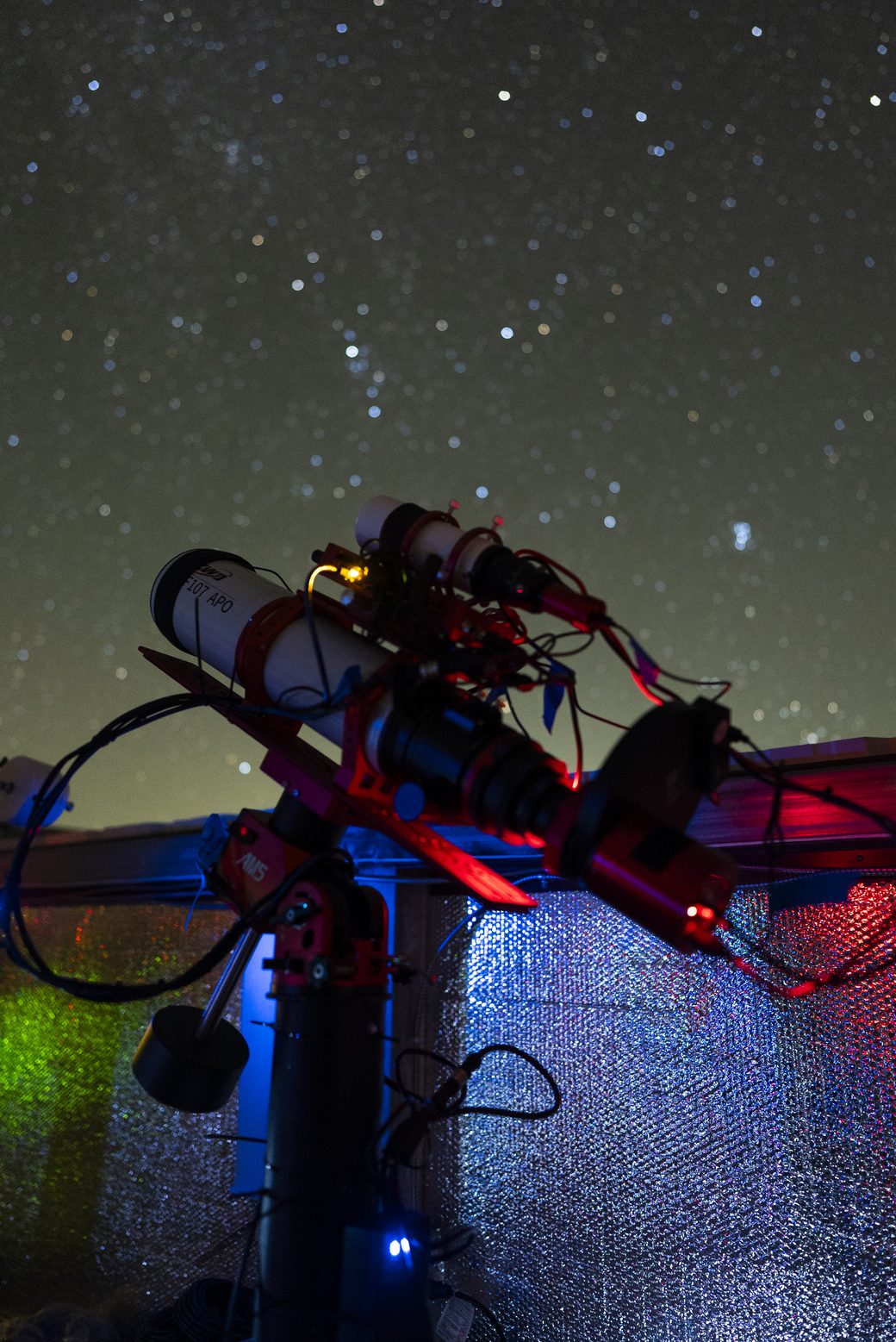
Today, I run telescopes from my backyard in Silverton, Oregon as well as remote telescopes at Starfront Remote Observatories (opens in a new tab) in Rockwood, Texas, and Deep Sky Chile (opens in a new tab) in the Chilean Andes. Oregon gave me the wonder, but it rations its clear nights. Starfront and Deep Sky Chile drastically increase the opportunities for running telescopes.
A word about the name. I would love to claim "Every Clear Night" as a stroke of my own creativity, but that is far from the truth. In the late 2010s, Oceanside Photo & Telescope — then the largest telescope retailer in the world — ran a website under this very name and domain, a place for their employees, marketing partners, and friends to share their images. This was before AstroBin (opens in a new tab) became the gold standard for sharing work among amateur astrophotographers; back then, Every Clear Night was one of the few corners of the Internet where this hobby lived. When OPT closed its doors in 2023, the site vanished with it. Out of curiosity, I later checked whether the domain was free. It was. I had wanted to build a home for my own work for years and had struggled to name it. This site is an homage.
And the name still means exactly what it says. Clear nights are too rare — and too extraordinary — to waste. Somewhere in the world, on every clear night, one of my telescopes is hopefully collecting light that traveled thousands, if not millions of years, just to arrive on the Earth. This site is where I share what it finds. Thank you for visiting. I hope you enjoy these adventures in space and time.